You do not have to become famous, build a personal brand around your face, or land big brand deals to make money on Instagram. You can build a business around niche audiences, account growth, or services that other businesses need.
I have personally used all five methods below. Together, they have helped me earn between $5,000 and $20,000 per month from Instagram-related businesses. That is my experience, not a promise of what someone starting today will earn.
I will start with the model I consider the simplest to operate, then move toward the ones that require more knowledge and experience.
A note on timing: These examples come from my 2019 experience. Treat the earnings, marketplaces, and automation workflows as historical examples, not current guarantees. Before using growth software or considering an account transaction, review Instagram’s current Terms of Use and the rules for your intended activity.
Table of Contents
- Key Takeaways
- 1. Grow a Theme Account and Sell Shoutouts
- 2. Flip Existing Instagram Accounts
- 3. Grow Theme Accounts From Scratch and Sell Them
- 4. Offer Instagram Client Management
- 5. Offer Instagram Consulting
- Which Instagram Business Model Fits You?
Key Takeaways
- Theme accounts can earn through paid promotions without making you the face of the business.
- Flipping existing accounts and growing accounts from scratch require different starting resources and skills.
- Client management generates recurring revenue by handling Instagram tasks businesses want to outsource.
- Consulting should follow proven experience and results, not serve as your first learning step.
1. Grow a Theme Account and Sell Shoutouts
A theme account focuses on a topic rather than a person. Think yoga, fitness, travel, food, or cars. People follow because they are interested in the content, so you do not need to make yourself the center of the account.
Once you have an audience, you can sell shoutouts. A shoutout is simply a paid promotion published on your page.
People generally buy them for one of two reasons:
- To promote a product: They want to put an offer in front of your followers.
- To grow their own account: They want exposure to an audience interested in the same niche.
How selling a shoutout works
Most of my shoutout inquiries came through Instagram direct messages. The process was straightforward:
- A potential customer contacts you.
- You agree on the price and posting schedule.
- They send payment and the content they want published.
- You publish the promotion as agreed.
Another option is listing your account on a shoutout marketplace. Platforms such as Shoutcart and PlugHype were examples I discussed, where customers could find accounts and arrange promotions through the platform.
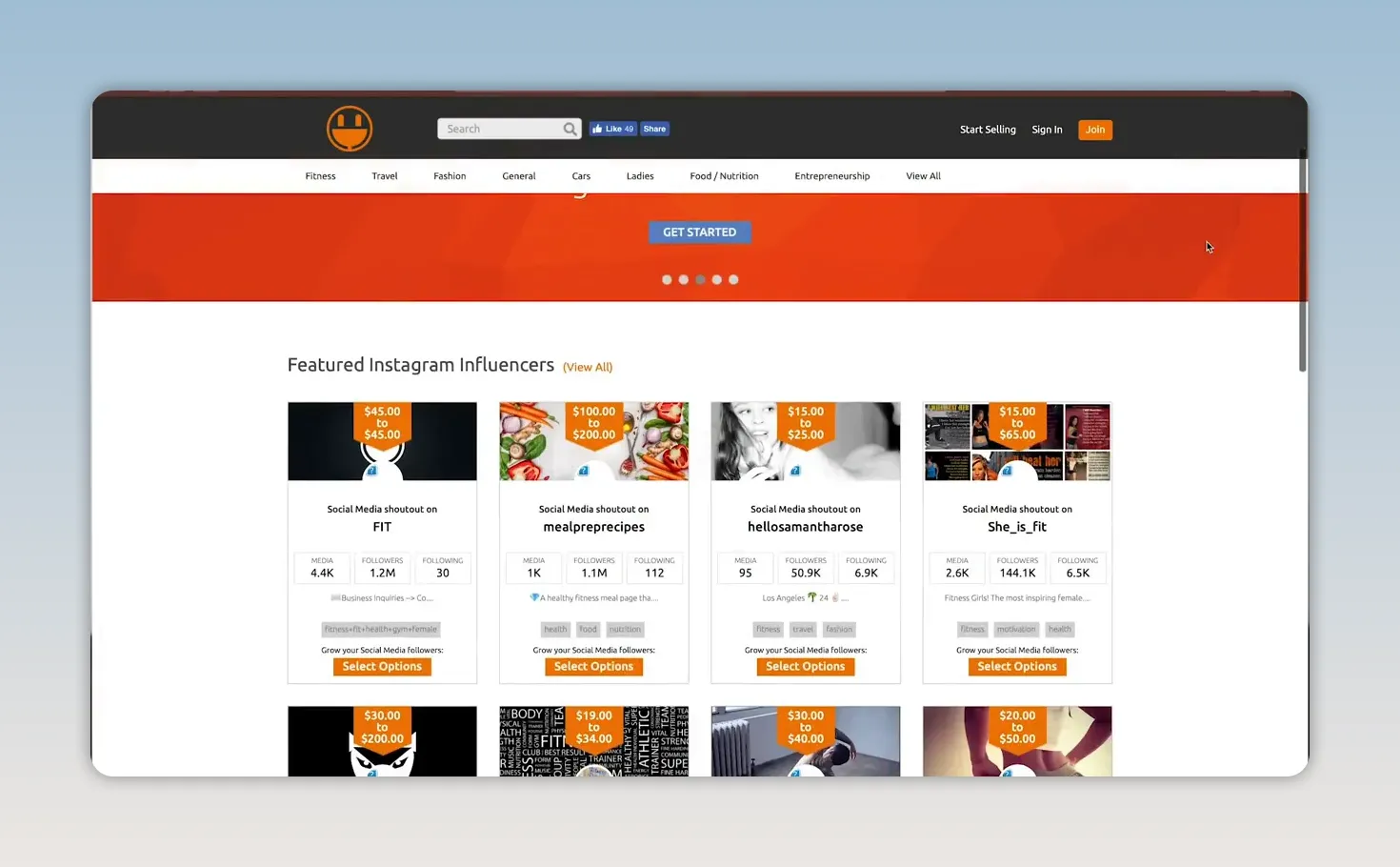
This is why I consider shoutouts the easiest model to operate. Once the audience exists, fulfilling an order is relatively simple. You are not building a complicated service or spending an hour advising each customer.
The hard part is building the audience in the first place.
When can a theme account start earning?
In my experience, shoutout requests began arriving at around 10,000 followers. That was an observation from my accounts, not a universal minimum or a guarantee that an account will attract advertisers at that size.
My historical growth process was to build the initial audience using follow and unfollow activity, then transition to posting content with viral potential a couple of times per day. The goal was to reach more people through Explore, hashtags, and other discovery routes.
I also used automation software to reduce repetitive work and manage many accounts at once. That was how I approached scaling at the time, but it should not be treated as a current set-and-forget recommendation. Any tools or growth activities need to be checked against the platform’s current rules.
My shoutout earnings
I started with three yoga theme accounts. On one account with roughly 10,000 followers, I charged about $15 per shoutout. Even those small sales added up to a few hundred dollars per month, which I was happy with in the beginning.
As the accounts grew, I could charge more. Eventually, those three pages generated between $3,000 and $4,000 per month from shoutouts.
I later sold them so I could spend more time on other projects. That experience also introduced me to another way of monetizing Instagram audiences: selling the accounts themselves.
2. Flip Existing Instagram Accounts
Flipping means buying an existing account at a relatively low price and reselling it for more. The difference between the purchase price and sale price is the starting point for your profit, before any costs.
The opportunity I found came from two situations:
- Different ideas about value: Some owners did not know what their account might be worth to another buyer.
- Owners wanting a quick exit: Maintaining an account required ongoing content, and some people wanted to stop spending time on it.
For example, someone I spoke with told me they bought a car account with approximately 500,000 followers for $3,000. They then resold it for $40,000 to a buyer in Saudi Arabia who wanted to feature his cars on the page.
That is a $37,000 difference between the reported purchase and sale prices. It is also an exceptional anecdote, not a sensible baseline for planning your own returns.
Start small and learn to recognize value
If you are learning how this market works, do not go all in. Start with a small budget you are comfortable risking while you build your knowledge.
The key skill is telling a good deal from a bad one. A low asking price does not automatically make something a good purchase. You need a realistic understanding of whether another buyer would want the account and what they might pay.
My personal rule was to buy only accounts I believed I could resell immediately, even though I usually did not sell them straight away. I preferred accounts that also fit my existing growth workflow.
Typically, I would buy an account, continue growing it for a couple of months using my automation setup, and then resell it. The model combined buying at a favorable price with increasing the account’s audience before selling.
Take transaction risk seriously
There were plenty of scammers in this market. Do not send money simply because someone seems trustworthy in a conversation.
My approach was to use a middleman or an escrow service rather than relying on a stranger’s promise. That does not replace checking platform rules or understanding the transaction risks, but it addresses a different problem: trusting an unknown buyer or seller with the exchange.
3. Grow Theme Accounts From Scratch and Sell Them
This is different from flipping. Instead of buying an existing audience, you create an account and grow it yourself before finding a buyer.
It became one of my favorite methods and was the most lucrative for me personally.
The basic process was:
- Create a theme account in a niche such as fitness, travel, or food.
- Build its audience through an ongoing content and growth process.
- Look for a buyer once the account has become valuable enough to sell.
I got into this because people kept messaging me to ask whether they could buy the accounts where I was selling shoutouts. Those inquiries showed me there was demand for the audiences I was building.
Why I preferred it to actively selling shoutouts
Shoutouts require customer communication, scheduling, and publishing individual promotions. Growing accounts for a later sale involved fewer ongoing customer transactions in my setup.
I used automation software to handle much of the repetitive activity. That made the process more passive than actively selling shoutouts, although the outcome still depended on building accounts people wanted.
At one point, I set up 30 new accounts. About three months later, I began selling them and made more than $9,000 in profit during the first month of sales.
That timing matters. It was not $9,000 from starting with nothing in a single month. There was a growth period before the sales began.
Where I looked for buyers
Examples I discussed included opening sales threads on forums such as EpicNPC or creating individual listings on marketplaces such as Fameswap and Social Tradia.
These are historical examples of where account transactions took place, not assurances about current availability, safety, or platform compliance.
For a closer look at how I approached this model, my theme account growth and sales tutorial explains the workflow in more detail.
4. Offer Instagram Client Management
You do not have to monetize an audience you own. You can also charge businesses to help manage their Instagram activity.
Instagram client management is a recurring revenue model. Instead of getting paid for a single promotion or account sale, you charge clients weekly or monthly for an ongoing service.
My partner and I ran an Instagram growth service using our experience with account growth and automation. The aim was to help clients attract real, relevant followers for their businesses and brands.
Growth is only one possible service. You can also offer:
- Content management.
- Content strategy and broader account management.
- Instagram advertising management.
- Influencer research and outreach.
The basic idea is to take on work that a business wants to outsource and that you can perform well.
You do not need hundreds of clients
This is one reason I see client management as a potentially faster route to a full-time income than building a large portfolio of your own accounts.
The revenue math is simple:
- 20 clients paying $150 per month generate $3,000 in monthly revenue.
- 3 clients paying $1,000 per month also generate $3,000 in monthly revenue.
The price depends on the service. A narrow growth service and a full Instagram management package are not the same offer. Broader management, including content strategy, can support a higher price when the value justifies it.
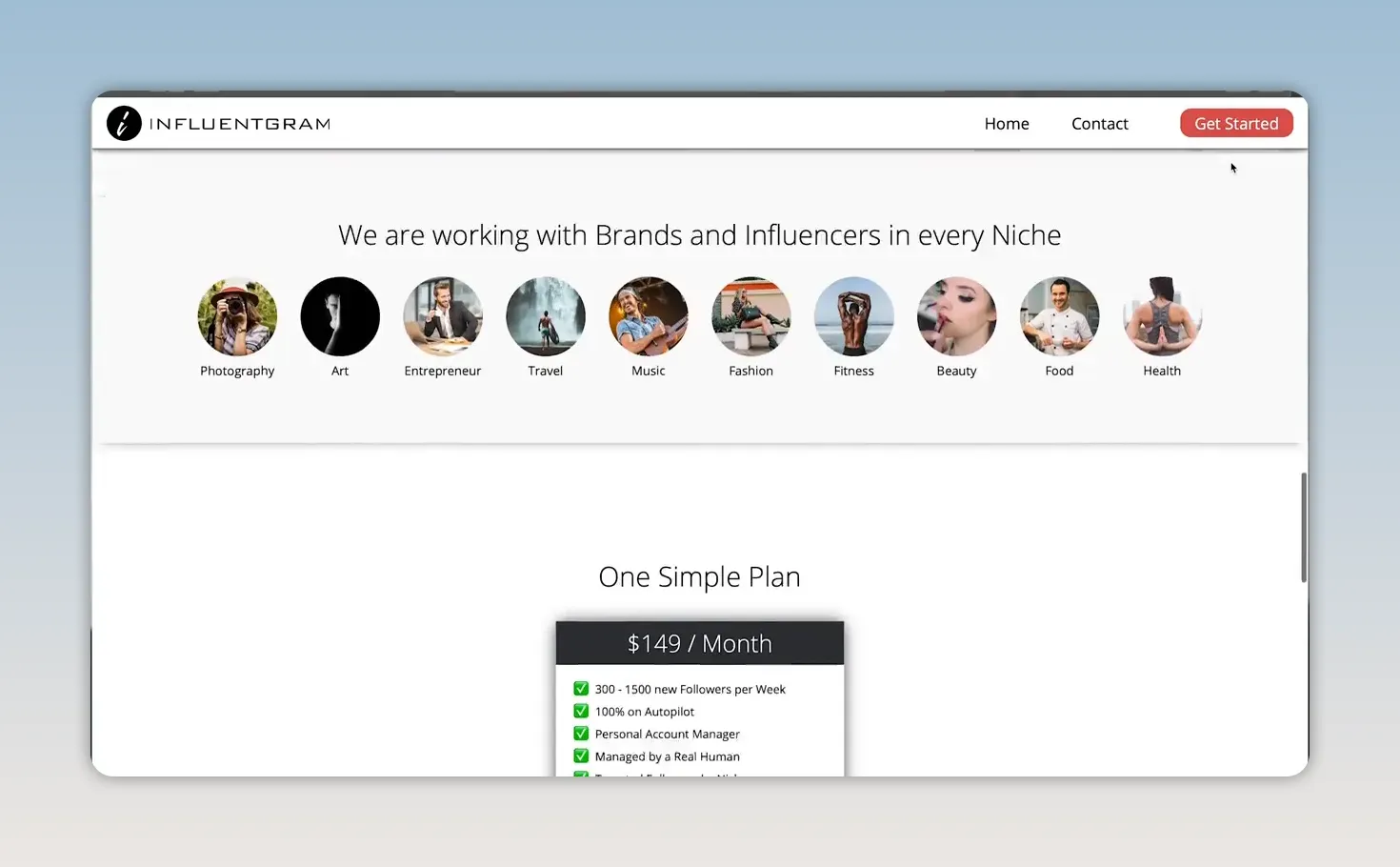
These calculations describe revenue, not take-home profit. They are useful for understanding how pricing and client count fit together, rather than predicting what you will earn.
Results can lead to referrals
If your service genuinely helps clients, those clients can recommend you to other business owners. That can reduce how much time you spend looking for new customers.
It starts with delivering a good service, though. Referrals are a benefit of producing results, not a replacement for learning how to do the work.
One free learning resource I recommended was the MPSocial forum. At the time, experienced operators shared detailed discussions about client management, including reports of businesses generating more than $45,000 per month. I found value in learning from people openly discussing what they were doing, rather than assuming useful information only existed inside expensive courses.
5. Offer Instagram Consulting
Consulting is straightforward as a business model: a client pays for access to your knowledge rather than hiring you to perform the ongoing work.
You connect with a potential client, agree on an hourly rate, and schedule a one-on-one call. My calls were typically arranged through Skype.
I received frequent consultation requests, particularly after I started sharing educational content publicly. People wanted help understanding how to grow Instagram accounts and use Instagram for marketing.
But there is a reason consulting comes last on this list.
You need real experience before charging people for advice.
Build expertise before selling it
I would not recommend consulting as your first step into the Instagram business. First, become successful at something specific. Then consider whether you can help another person achieve a useful result.
Potential clients need evidence that you understand the subject and have successfully applied what you teach. Knowing the terminology is not the same as having experience someone can benefit from.
There is also a difference between consulting and client management:
- Client management: You carry out the work for the client.
- Consulting: You help the client understand what to do and how to approach it.
Share useful information to build trust
You need some way for potential clients to discover your expertise. My preferred approach was to give away useful information through educational content.
Publishing on a platform such as YouTube helped me build an audience and demonstrate what I knew. People could learn from my free material before deciding whether they wanted one-on-one help.
You do not need to become famous. You do need to make your expertise visible and give people a reason to trust it.
Which Instagram Business Model Fits You?
These five methods earn money in different ways. Shoutouts monetize access to an audience. Flipping and growing accounts focus on building something another buyer values. Client management sells ongoing work, while consulting sells experienced guidance.
My simplest starting point was a theme account with paid shoutouts. Growing accounts for sale became more lucrative for me, while client management offered recurring revenue. Consulting made sense only after I had results and experience to draw on.
Choose based on what you can build or deliver, not just the biggest earnings example. The useful foundation is the same: understand a niche, learn how to create value, and develop a repeatable process before trying to scale.
Made with VideoToBlog using 5 REAL Ways How To Make Money On Instagram


